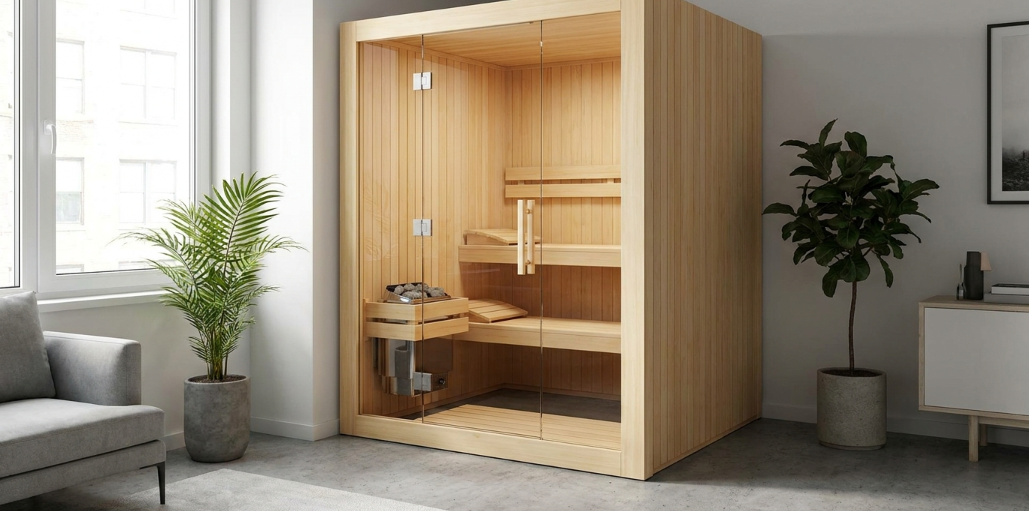
A well-insulated small sauna works fine through a cold winter, but expect warm-up times to run 10 to 20 minutes longer than in mild weather and the heater to cycle more often to hold its target temperature against outdoor heat loss. The main practical adjustments are keeping a clear, safe path to the unit through snow, checking the door gasket more often since cold makes materials contract, and being deliberate about the transition between the hot cabin and freezing outdoor air rather than treating it casually.
How Much Longer Does a Small Sauna Take to Heat in Winter?
A small two or three person cabin that normally reaches 170 to 190 degrees Fahrenheit in 30 minutes during mild weather often needs 40 to 50 minutes in single-digit outdoor temperatures, since cold air pulls heat through the walls and around the door faster than it does in summer. The gap depends heavily on insulation quality and how sheltered the unit’s location is; a cabin tucked against a garage wall out of direct wind loses less heat than one standing fully exposed in an open yard.
Does the Wood Handle Freeze-Thaw Cycles Well?
Cedar and heat-treated hemlock, the two most common small-sauna wood choices, both tolerate repeated freezing and thawing without structural issues as long as the exterior finish is intact and the base stays dry underneath. Where problems show up is at the door gasket and hinge hardware, which contract slightly in extreme cold and can develop small gaps that were not there in warmer months. A quick check before the coldest stretch of winter, closing the door on a sheet of paper to feel for slack anywhere along the seal, catches this before it turns into a heater working overtime to compensate.
What Changes About Maintenance in Cold Weather?
Wipe-downs and drying the cabin after each session matter just as much in winter, arguably more, since any moisture that does not fully evaporate before the next cold snap has more opportunity to cause problems at seams and joints. Clearing snow from immediately around the base and door threshold keeps meltwater from pooling against the floor framing, and a light shovel or broom pass after each snowfall is enough, no need for anything more aggressive that risks scratching exterior finish. Salt and ice-melt products are worth avoiding right up against the base, since runoff can wick into the bottom edge of exterior panels and leave a white mineral residue that is difficult to fully clean off once it has soaked into the wood grain over a season or two.
How Should You Handle Insulation and Placement?
Most small saunas built for outdoor, year-round use already include foil-backed insulation in the wall cavity rated for a wide range of climates, so extra wall insulation is rarely necessary. What does help in climates that regularly see sub-zero nights is a layer of rigid foam board under the base pad, which cuts heat loss through the floor, often the least insulated surface on a small cabin. Positioning the unit with some wind shelter, behind a fence line or garage rather than in the most exposed corner of the yard, also meaningfully reduces how hard the heater has to work on the coldest nights. A short section of outdoor-rated matting or decking laid along the path from the house to the door threshold makes a real difference too, since a bare dirt or grass path turns to mud during the freeze-thaw cycles typical of early winter and late spring, and a slick, uneven path right outside a hot cabin is a genuine fall hazard worth designing around before the first snow rather than after.
Is the Hot-to-Cold Transition Actually a Concern?
Stepping from a 180 degree cabin into freezing outdoor air for a minute or two is a long practiced habit in cold-climate sauna culture, and most healthy adults tolerate it without issue. The temperature swing is a genuine cardiovascular stressor though, and the research on sauna bathing broadly notes that people with unstable angina, a recent cardiac event, or uncontrolled blood pressure should be cautious with heat exposure generally, a caution that extends to sharp temperature swings. Easing the transition, a warm robe and a slower walk rather than a dash into snow, is a reasonable middle ground for anyone unsure how their body handles the extremes.
What Does the Broader Research Say About Sauna Use and Cold Climates?
A 2018 review in Mayo Clinic Proceedings summarized cardiovascular associations tied to regular sauna bathing across long-running Finnish cohorts, a country with a climate not unlike many cold-winter regions of North America, where the practice has coexisted with harsh winters for generations. A 2001 review in The American Journal of Medicine covered both benefits and contraindications of sauna use broadly, useful context for anyone weighing winter use against personal health factors. A 2018 paper in the American Journal of Physiology – Regulatory, Integrative and Comparative Physiology examined the physiology of heat and cold exposure together, relevant background for understanding why the hot-to-cold transition common in winter sauna use is a real physiological event and not just a sensation.
Is a Small Sauna Worth Running Through a Full Winter?
For households already using their sauna regularly in warmer months, keeping the habit through winter is usually worth the modest increase in electricity from longer heater cycles, particularly since consistency of use over the year is what the cardiovascular research most consistently ties to better outcomes. Anyone shopping specifically for a unit built to handle year-round cold-climate use can compare insulation specs and winter-rated models through the SweatDecks small saunas collection and other specialty retailers before ordering, since not every small sauna on the market is built with the same climate range in mind.
Frequently Asked Questions
Does a small sauna take longer to heat up in freezing weather? Yes, usually 10 to 20 minutes longer. Cold air pulls heat through the walls faster, so a 30-minute warm-up can stretch to 40 or 50 minutes.
Do I need extra insulation for a small sauna used through winter? Most units already include adequate wall insulation. Adding foam board under the base pad helps in climates that regularly drop below zero.
Is it safe to go from a hot sauna straight into freezing outdoor air? Brief exposure is a long-standing practice, but it is a real cardiovascular stressor, so anyone with heart or blood pressure issues should ease the transition.
Does snow or ice affect a small backyard sauna’s structure? A properly built roof handles normal snow loads, but clearing heavy accumulation prevents added weight from stressing the seams over winter.
Should the heater run differently in winter than in summer? The target temperature stays the same, but expect longer, more frequent heater cycles to offset outdoor heat loss, which is normal.
References
- Cardiovascular and Other Health Benefits of Sauna Bathing: A Review of the Evidence, Mayo Clinic Proceedings, 2018
- Benefits and risks of sauna bathing, The American Journal of Medicine, 2001
- Effects of heat and cold on health, with special reference to Finnish sauna bathing, American Journal of Physiology – Regulatory, Integrative and Comparative Physiology, 2018
By Sandra Ruiz